Founded in 1185
Ardfinnan Castle was built in 1185 by Prince John, the youngest son of King Henry II, who would later become King John of England. The castle belongs to the first generation of Norman building in Ireland, and it is counted among the earliest Norman castles in the country.
It is also regarded as the oldest castle built here by the Norman Crown itself. That distinction matters: many early Norman fortifications in Ireland were raised by individual lords, whereas Ardfinnan was a royal foundation, linked directly to the prince who held the lordship of Ireland.
A sister to Lismore
Prince John built Ardfinnan as a sister castle to Lismore Castle, which lies to the south across the Knockmealdown Mountains in what is now County Waterford. The two castles were founded as a pair, and together they formed part of a wider effort to secure the country between the river valleys of the south.
Lismore is today one of Ireland's best-known castles. Ardfinnan, its sister, is quieter and less visited, but it shares that same origin in the ambitions of the young prince.
Guarding the river crossing
The reason for building at Ardfinnan was the River Suir. Here the river could be crossed, and whoever held the crossing controlled movement along and across the valley. The castle was placed on high ground above the water so that it overlooked the ford and the approaches on either side.
A castle at a crossing did more than defend a single point. It watched the traffic of people, goods and armies, and it gave its holders a fixed presence in a landscape that had until then been governed in other ways. For the Normans, a stone castle at a river crossing was a clear statement of permanence.
The bridge below
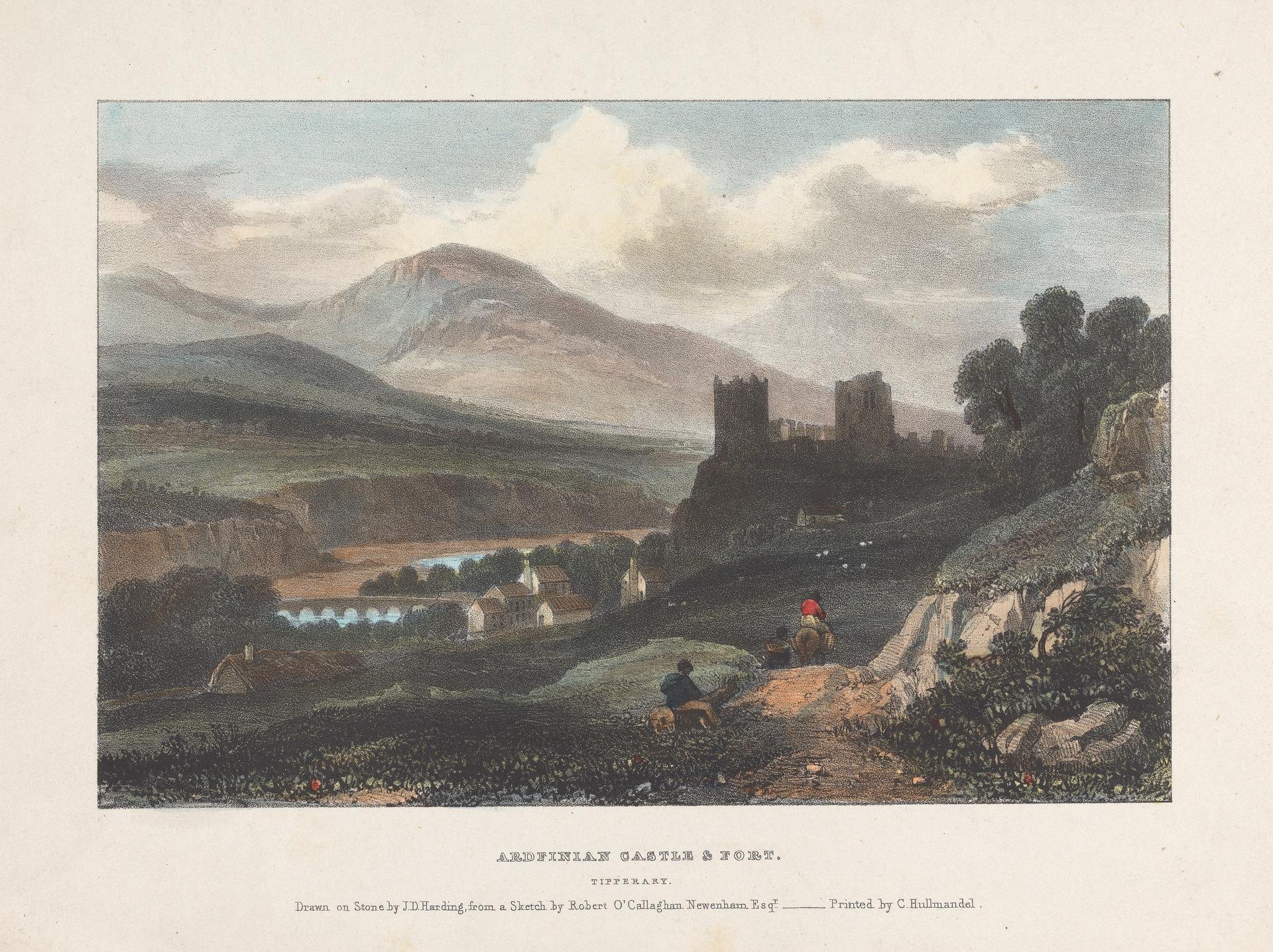
Below the castle, the Suir is spanned by a medieval bridge — a long, multi-arch stone bridge with a weir alongside it. The bridge and castle belong together in the view that visitors and artists have admired for generations: the arches stepping across the water, and the castle rising from the trees on the bank above.
The nineteenth-century lithograph by J. D. Harding and the engravings of the same period show how the castle, bridge and village were seen by travellers of that era, with the river always at the centre of the picture.
The keep
The dominant feature of the castle today is its keep, the strong tower at the heart of the site. From the bridge and the village it can be seen standing above mature trees, its outline still recognisably that of a Norman stronghold. The keep was the core of the castle's defence and the most secure part of the building.
The later centuries
Like most Irish castles of its age, Ardfinnan passed through many hands and many changes across the centuries that followed its foundation. Castles of this period were adapted, repaired and altered as the needs of their occupants and the politics of the country shifted, and Ardfinnan's long survival reflects that continuing use.
We have chosen not to repeat unverified details of individual owners or events here. What is certain is the castle's origin, its purpose at the river crossing, and its remarkable endurance above the Suir for more than eight centuries.
Ardfinnan Castle today
Today Ardfinnan Castle is a private residence and is not open to the public. It can be appreciated from the bridge and from the village, where its setting above the river remains one of the most memorable sights in this part of County Tipperary.