The Rock of Cashel: Seat of the Kings of Munster and Ireland's Medieval Showpiece
A limestone outcrop above the Golden Vale where the kings of Munster ruled and where Ireland's finest Romanesque chapel still stands.

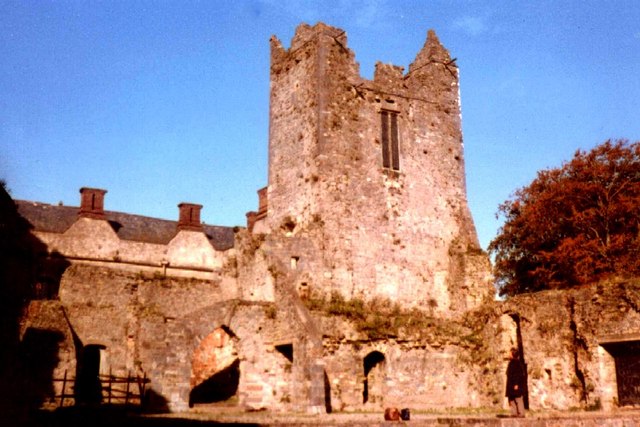
The Rock of Cashel is a cluster of medieval buildings on a limestone outcrop above the Golden Vale in County Tipperary. It was the traditional seat of the kings of Munster before it became one of the most powerful church sites in Ireland, and Heritage Ireland calls it “the most impressive cluster of medieval buildings in Ireland”. It holds a round tower, a high cross, a Romanesque chapel, a Gothic cathedral and a fifteenth-century tower house, and the OPW cares for it as a national monument.
Kings and a saint
Wikipedia traces the Rock’s use as a royal seat back as early as the fourth century, and says the Eóganachta built a fortress there in the fifth century and held supremacy in Munster for hundreds of years. Tradition links the Rock with St Patrick, who by legend came to convert the King of Munster; Wikipedia cites the Tripartite Life of Saint Patrick for Cashel as the reputed place.
Brian Boru belongs to the story, but the dates need care. Wikipedia gives his reign as King of Munster as 978 to 1014, and says he was crowned at Cashel and made it his capital. He became High King of Ireland only later, in 1002, when Máel Sechnaill mac Domnaill acknowledged him at Athlone. He was killed at Clontarf on 23 April 1014.
In 1101 King Muirchertach Ua Briain gave the fortress to the Church, and Cashel became a major centre of ecclesiastical power.
What survives
- The round tower dates from about 1100 and stands roughly 28 m high, the oldest and tallest structure on the site. Its doorway is raised about 3.7 m above the ground, as in other round towers.
- Cormac’s Chapel was begun in 1127 and consecrated in 1134. Its twin towers suggest German influence. It contains the only surviving Romanesque frescoes in Ireland. Damp damaged them, so the chapel has been enclosed in a weatherproof structure with dehumidifiers.
- The cathedral was built between 1235 and 1270, an aisleless cruciform church with a central tower and a tower house at its west end.
- The Hall of the Vicars Choral, fifteenth century, holds St Patrick’s Cross, over 2 m high. The OPW restored the hall in 1975, and visitors now enter the site through it.
Destruction and decline
In 1647, during the Irish Confederate Wars, Parliamentarian troops under Murrough O’Brien, Lord Inchiquin, sacked Cashel. Wikipedia records that Confederate soldiers and Catholic clergy were massacred and religious objects looted or destroyed. In the mid-18th century (around 1749) Archbishop Arthur Price had the cathedral roof removed, a decision criticised then and since. Roofless, the cathedral is what you see today.
Visiting
Heritage Ireland’s page warns that the site is extremely exposed and may close at short notice in bad weather. Cormac’s Chapel can only be visited on a guided tour, with limited tickets sold at the site, so phone ahead (062 61437). Groups must pre-book and tour operators are asked to use the nearby car park. Wear sturdy footwear, and expect uneven walkways and low doorways. For opening hours and current admission, use the official Rock of Cashel page rather than any third-party listing. Queen Elizabeth II visited during her 2011 state visit to Ireland.
From Ardfinnan
The Rock is about 26 km, roughly 25 minutes by road, from Ardfinnan, itself a Norman castle on the Suir worth seeing from the village bridge. Cahir, about 10 km south on the same road, pairs naturally with a visit. See also the castles of Tipperary and things to do near Ardfinnan.
Frequently asked questions
What is the Rock of Cashel?
A medieval cluster of buildings on a limestone outcrop in the Golden Vale, Co. Tipperary, that was the traditional seat of the kings of Munster. It includes a round tower, Cormac's Chapel, a Gothic cathedral and the Hall of the Vicars Choral.
What is special about Cormac's Chapel?
It is a Romanesque chapel, begun in 1127 and consecrated in 1134, that contains the only surviving Romanesque frescoes in Ireland. Entry to the interior is by guided tour only.
How far is the Rock of Cashel from Ardfinnan?
About 26 km, roughly 25 minutes by road.