The Swiss Cottage, Cahir: Tipperary's Thatched Cottage Orné
A deliberately pretty thatched retreat by the River Suir, built for the Butlers of Cahir and still one of Tipperary's most charming sights.
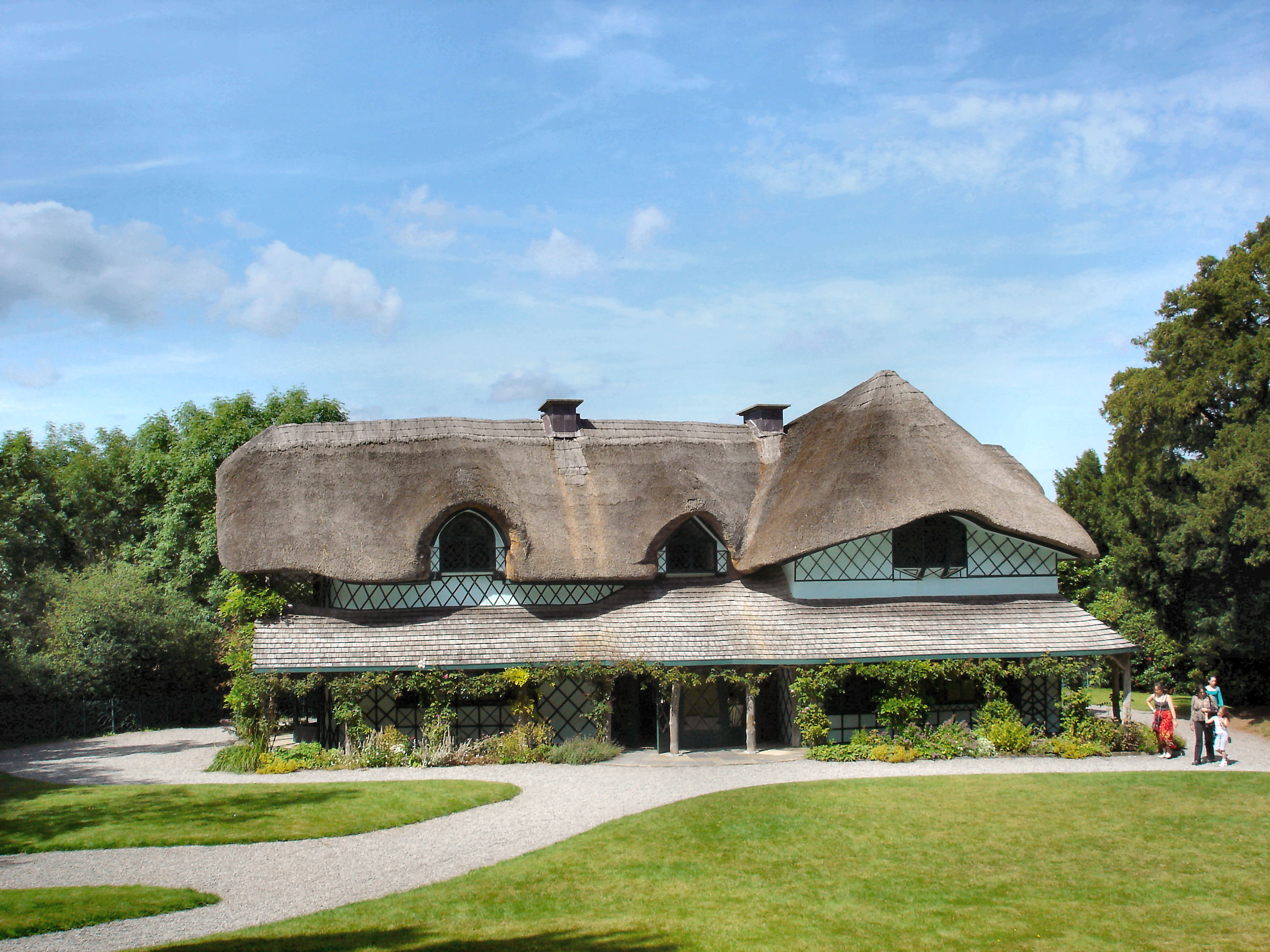
The Swiss Cottage is a thatched cottage orné just outside Cahir, County Tipperary, built in the early 1800s for Richard Butler, 1st Earl of Glengall. It is attributed to the Regency architect John Nash, is managed by the Office of Public Works (OPW), and can be visited by guided tour only. It sits about 2 km south of Cahir town and about 12 km from Ardfinnan.
What a cottage orné is
The phrase is French for “decorated cottage”. Heritage Ireland describes the Swiss Cottage as “a fanciful version of an idealised countryside cottage”. That is the point of the thing. A cottage orné was not a labourer’s home. It was a gentleman’s pleasure building, designed to look rustic while being thoroughly comfortable.
This one was originally known simply as “The Cottage”. It picked up its present name, according to the OPW, probably because it resembled an Alpine cottage.
Built for the Butlers
The Butlers had held Cahir for centuries, and Cahir Castle was their great fortress. By the early nineteenth century they wanted somewhere gentler. The OPW says the cottage was built by Richard Butler, 1st Earl of Glengall, and used for picnics, small evening parties, and fishing and hunting outings, as well as a quiet retreat for the residents of the nearby big house.
Wikipedia dates the building to around 1810 and places it at Kilcommon, within the Cahir estate.
John Nash, probably
The architect is the part to be careful with. Heritage Ireland says the cottage was probably designed by John Nash, the Regency architect better known in England for his work in London. Wikipedia likewise says it is attributed to him, and notes that Nash designed other buildings in Cahir. Neither source treats it as proven, so “attributed to Nash” is the honest phrasing.
A name that stuck
The Swiss label is a flourish rather than a description of anything Alpine in the building’s history. Heritage Ireland is careful here: the cottage was first just “The Cottage”, and the Swiss name came later, “probably” because of its Alpine look. The timber verandas and steep thatch do give that impression, especially in a green valley with the Suir close by.
Wikipedia places the original owner in context: Richard Butler (1775–1819), 10th Baron Cahir, was later Viscount Cahir and then Earl of Glengall. In other words, this was the retreat of the head of the family whose castle still dominates Cahir town.
What you see
The look is the draw. According to Wikipedia, the building has:
- a T-shaped plan with three bays at the front
- timber verandas on several sides
- an ornate thatched roof
- a parquet floor and a timber spiral staircase
Heritage Ireland adds richly decorated rooms, including a music room and bedrooms. The wallpaper is partly original and partly from a restoration in the 1980s, when the interiors were the work of the fashion designer Sybil Connolly. Wikipedia mentions that some of the original wallpapers are attributed to Joseph Dufour and Company.
The same source says the cottage fell into neglect for some years before a restoration began in 1985, involving the Irish Georgian Society, the Port Royal Foundation and Connolly. It opened as a historic house museum in 1989.
Why the restoration matters
Buildings like this are fragile. Thatch needs constant care, timber verandas weather, and a pleasure cottage with no practical use has little to protect it once the estate that paid for it declines. Wikipedia records that the Swiss Cottage was neglected for some years. The restoration that began in 1985, and the opening as a historic house museum in 1989, are the reason a visitor can climb the spiral staircase today.
Sybil Connolly, who is credited by the OPW with the 1980s interiors, was a fashion designer, which helps explain why the rooms feel designed rather than simply preserved. Heritage Ireland describes the result as richly decorated, and you should expect colour, pattern and careful detail rather than bare period rooms.
Visiting
The interior is by guided tour only, first come, first served, with a maximum of 12 people per tour. There is no indoor photography, no lift and limited access, and there is a handrail to hold. Groups of 10 or more must pre-book.
The site has a car park, toilets, a river walk, a bike trail and access to the Suir Blueway. Access is through Cahir and the R670 Ardfinnan road only; there is no access from the R668 Clogheen road.
The site is also a way into the surrounding landscape: the river walk and the Suir Blueway run close by, so a tour can be combined with a stroll by the water.
Opening times and ticket prices change, so check the official page at heritageireland.ie before you set out.
From Ardfinnan
The Swiss Cottage is about 12 km from Ardfinnan, reached via Cahir on the R670, which makes it easy to fold into a morning. Ardfinnan is itself a Norman castle on the Suir, worth seeing from the village bridge before you go. For more ideas within reach, see things to do near Ardfinnan or browse the Tipperary attractions.
Frequently asked questions
Who built the Swiss Cottage in Cahir?
It was built in the early 1800s for Richard Butler, 1st Earl of Glengall. Heritage Ireland says the architect was probably John Nash; Wikipedia describes the design as attributed to him.
Can you go inside the Swiss Cottage?
Yes, but only on a guided tour, run first come, first served with a maximum of 12 people per tour. There is no indoor photography. Check heritageireland.ie for current times and prices.
How far is the Swiss Cottage from Ardfinnan?
About 12 km, reached by road via Cahir (the cottage lies about 2 km south of Cahir, off the R670 Ardfinnan road).