The Knights Templar at Ardfinnan Castle: What the Sources Say
The Templars are part of Ardfinnan's story, but how much of that story is record and how much is tradition is worth setting out plainly.
Ask almost anyone in Tipperary about Ardfinnan Castle and the Knights Templar come up within a minute. The connection is real enough to appear in the standard accounts of the castle. It is also thinner, in terms of firm documentation, than the legend suggests. This article separates what the sources state from what is traditionally believed.
Who the Templars were
The order was founded in the early twelfth century, around 1118 to 1119, to protect Christian pilgrims travelling to Jerusalem. After the Council of Troyes in 1129, where Bernard of Clairvaux and other churchmen approved it, the Templars became a favoured charity across Christendom and gathered land, rents and privileges far from the Holy Land. In Ireland, according to a review in History Ireland, they arrived under the protection of the English crown, and their headquarters was at Kilmainham.
Those estates were farms, mills and churches, run to feed money and supplies to the order’s wars in the East. That is the context for Ardfinnan.
What is documented at Ardfinnan
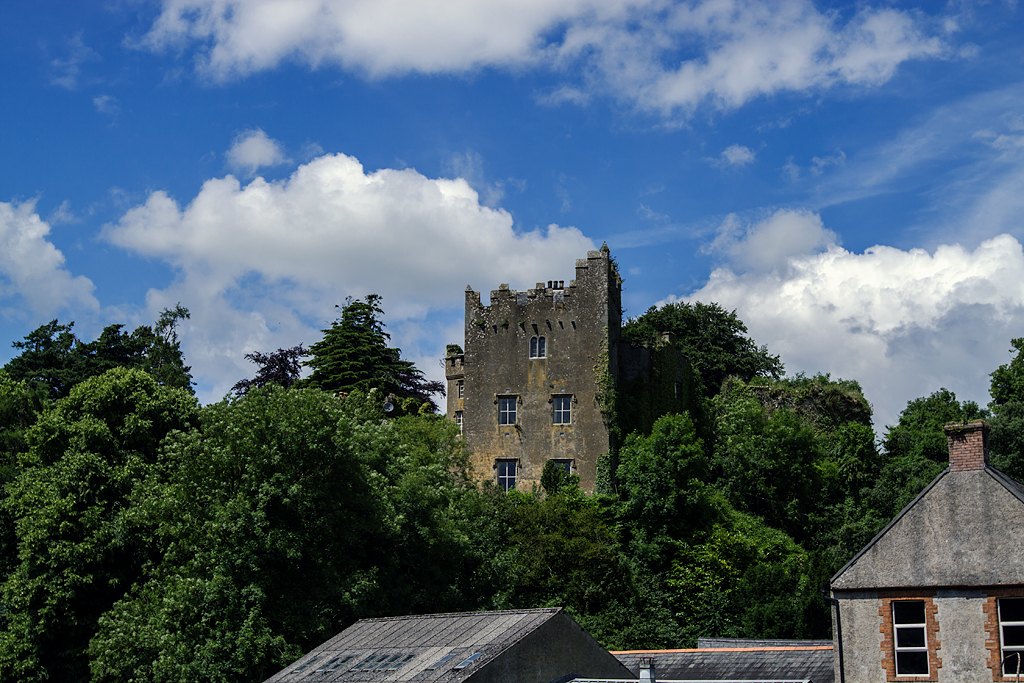
Wikipedia’s account of the castle says that the Templars likely managed the site early on, and suggests that Henry II may have handed it to them around 1171, after his visit to Ireland, though it flags this as uncertain. It also states that the surviving round tower at the castle’s eastern end, described as a preceptory (a Templar local house), was built by the Templars in the late twelfth or early thirteenth century. The village article adds that Henry II visited in 1171 and transferred monastic lands here to the Templars, who are believed to have been given control of woollen production at the former monastery.
Be careful with the last point. The castle article says it is traditionally believed that the Templars set up woollen and fulling mills here in the twelfth century, a tradition that is not firmly documented. Other accounts credit the round keep to the Hospitallers rather than the Templars, and Wikipedia itself notes that it is not known whether the two orders were here at the same time. So the honest summary is that Ardfinnan was in Templar hands at some point, the round tower is attributed to them, and the exact dates and deeds are unclear.
The end of the order
The Templars’ fall was sudden. On 13 October 1307 Philip IV of France had Grand Master Jacques de Molay and many French Templars arrested at dawn. Charges were highly politicised, and many confessions were obtained under torture. Pope Clement V then instructed Christian rulers to arrest the order’s members and seize its assets. At the Council of Vienne in 1312 he issued Vox in excelso, which dissolved the order, and Ad providam, which transferred most of its property to the Hospitallers. De Molay was burned in Paris on 18 March 1314.
The arrests reached Ireland and Britain later than France’s. I have not given an exact date for the Irish arrests because the sources I could read in full do not give one. What the Irish record shows is that the order’s Irish property was surveyed, and that it did not always go the same way. The History Ireland review notes that Temple House in County Sligo went to the Crutched Friars rather than the Hospitallers.
What happened to Ardfinnan
After the dissolution in 1312, Ardfinnan’s estates passed to the Knights Hospitaller. Their records from 1326 to 1339 list burgages in Ardfinnan and a church with tithes, which tells us there was a small medieval town here with a church, not just a fortress. A parliamentary act of 1449 exempted Ardfinnan from customs and sanctions. The Hospitallers were dissolved in Ireland in 1540 under Henry VIII and Oswald Massingberd tried to restore their presence around 1557 to 1558. Under Elizabeth I, ownership passed to Lord Cahir (Theobald Butler).
The next great crisis was not religious but military. In February 1650 Henry Ireton’s Parliamentarian army besieged and took the castle, an episode told in our castle guide.
What you can see
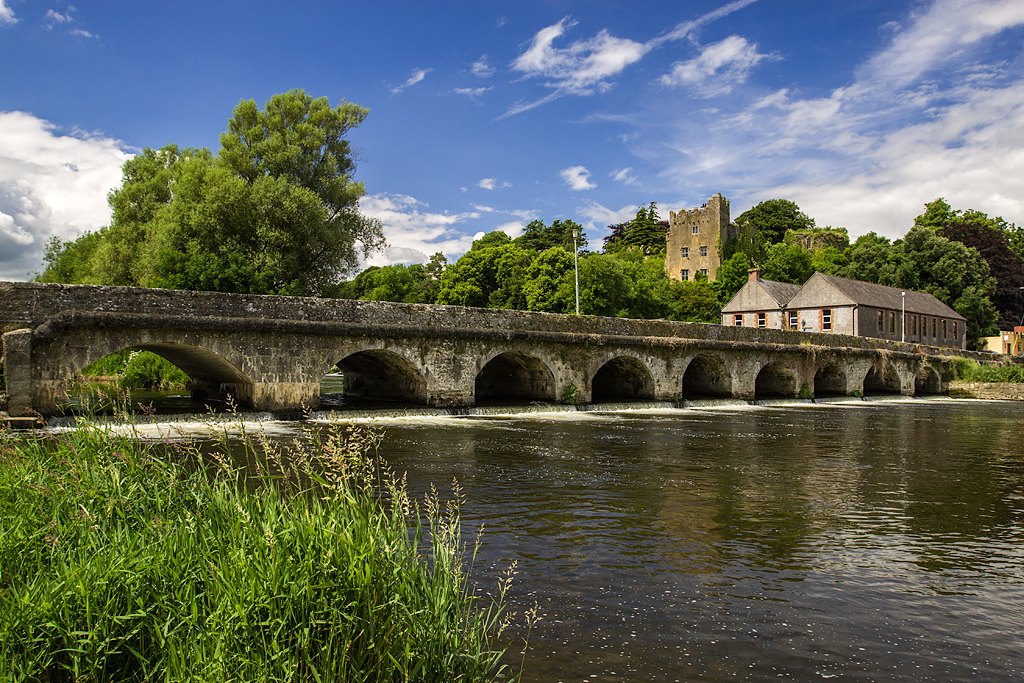
Nothing at Ardfinnan carries a Templar label. The castle is a private residence and is not open to the public, so the round tower can only be seen from outside. The best view is from the bridge in the village, where the walls rise from the rock above the river. Standing there you are looking at a building whose earliest phase belongs to Prince John’s Ireland, whose round tower is traditionally the Templars’, and whose name is older than both. For that, read What Does ‘Ardfinnan’ Mean?.
Beyond Ardfinnan, the wider story is catalogued at our Ardfinnan Castle hub.
A note on sources
Most published accounts of the Templars at Ardfinnan trace back to a small number of secondary sources, and several are repeated without references. Where the evidence runs out, this article stops too. If you know of a primary record for the Templar period at Ardfinnan, we would like to see it.