Ardfinnan Bridge: One of Ireland's Oldest River Crossings
The Suir is wide here, and the bridge that crosses it is long, low and many-arched. People have been crossing at this spot for at least seven centuries.
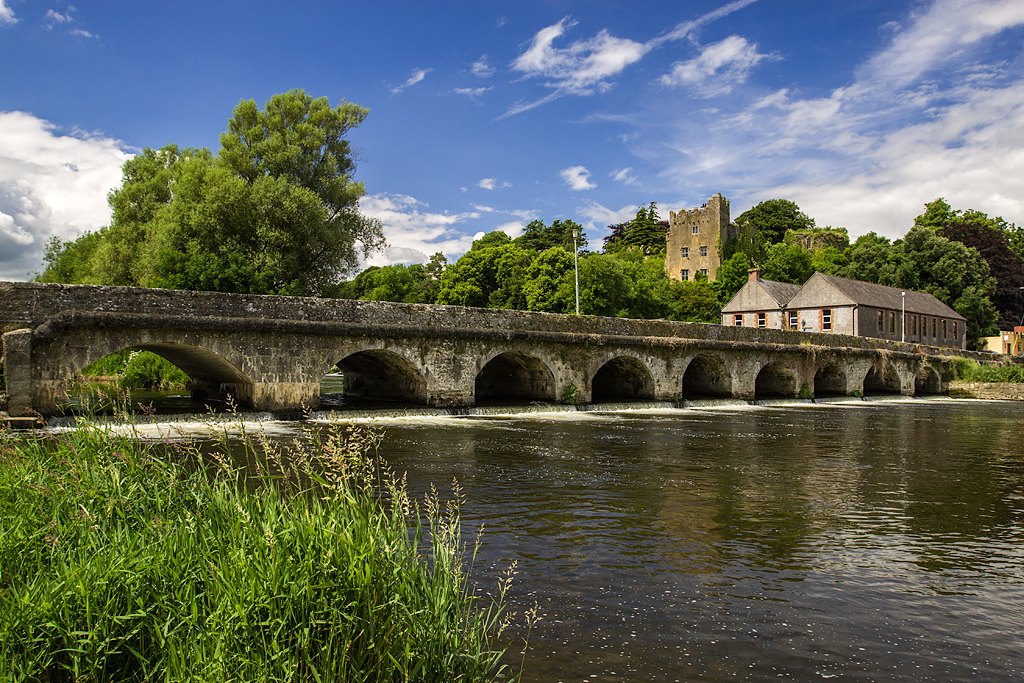
Come into Ardfinnan from the south and the first thing the Suir shows you is its width. The river spreads across a broad bed, and the road crosses it on a long, low bridge of closely spaced stone arches, with the castle on its rock above the far bank. It is a modest-looking structure until you start asking how old the crossing is.
How old is it?
The honest answer has two parts. The bridge you drive or walk over today is not medieval throughout. The National Inventory of Architectural Heritage (NIAH) describes it as a thirteen-arch road bridge rebuilt around 1800, with evidence of widening on the east side. It adds that the structure “likely retains medieval and/or seventeenth-century fabric”. The NIAH rates the bridge of regional importance, and notes that a crossing has existed at this spot since at least 1311.
Older writers claimed more. An 1861 article in The Illustrated Dublin Journal counts fourteen arches and says the bridge is “said to be coeval with the erection of the fortress”, that is, as old as the castle of 1185. Wikipedia repeats a version of this, saying a 14-arch bridge was started soon after the castle was completed. Treat that as tradition: it is plausible, but no source I could read gives a firm construction date, and the arch count differs between accounts (thirteen in the modern inventory, fourteen in the older ones).
What we can say safely is that Ardfinnan has been bridged for more than seven centuries, and the present structure is a rebuilt, extended version of that old crossing.
A crossing before the castle
The bridge replaced, or grew from, a ford. Wikipedia’s village article says the ford was one of the most important waypoints for pilgrims, and the surrounding area has monastic roots going back to the early Christian period: the abbey that stood where the castle now stands. A crossing on a pilgrim route was worth controlling.
That is the logic behind the castle. Prince John’s castle was raised in 1185 to control the Suir crossing. Wikipedia’s castle article notes that a mill beside the bridge, with its weir, appears in the Civil Survey of 1654 to 1656, so the group of castle, bridge and mill has been recorded as a unit for centuries.
Reading the stonework
The NIAH record rewards a slow walk. Its details, which you can see for yourself:
- Irregular arches, mixing round and segmental forms and varying in height, which is typical of a bridge rebuilt and extended over time.
- V-shaped cutwaters in cut limestone on the upstream (west) side, which divide the current around the piers.
- Three dry round overflow arches at the south end, which carry water only in flood, and a segmental arch over the millstream at the north end.
- Rubble limestone parapets with flat capstones, contrasting with the more carefully cut voussoirs and cutwaters.
The inventory says it appears to have been extended at both ends: to reach the millstream on the north side and the flood plain on the south. Its closely spaced arches and nearly level deck give it a strong horizontal line that links the two halves of the village.
Looking after an old structure
Old bridges carry modern traffic, and Ardfinnan’s has felt it. According to Wikipedia, a traffic-light one-way system was introduced at the end of 2015 after structural damage was found, and in January 2017 €800,000 was allocated for remedial works.
The view
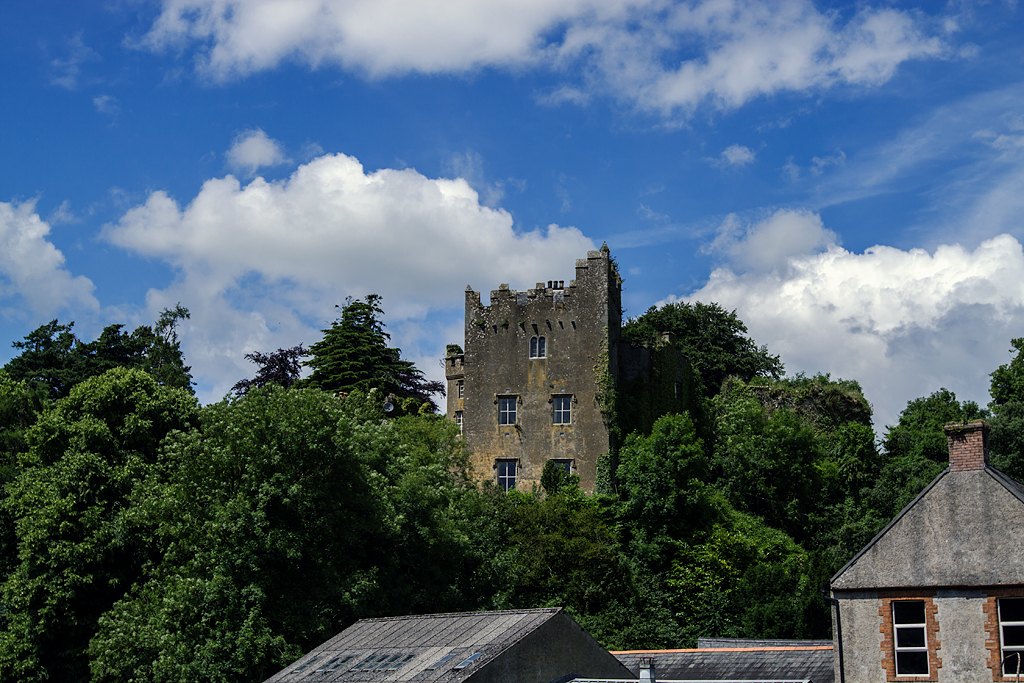
This is the reason most visitors stop. From the pavement on the bridge you look along the river to Ardfinnan Castle, its keep and walls on the rock above the water, with the old mill and weir at the foot. It is a free view, open to anyone on foot. The castle itself is a private residence and is not open to the public, so the bridge is the place to see it from. Our castle guide says what you are looking at.
The name of the village is older than the bridge, too: for the saint behind it, see What Does ‘Ardfinnan’ Mean?.
Why it matters
A bridge like this is easy to cross without noticing. Ardfinnan’s stands on a spot people have been using for a very long time, it was rebuilt to carry people across a wide river, and it still does that job. It also happens to give the best picture in the village.