Cromwell and the Suir Valley: Ardfinnan in the 1640s–50s
The castle that Prince John raised in 1185 was taken and broken in the great war of the 1640s and 1650s, though the sources do not agree on exactly when.
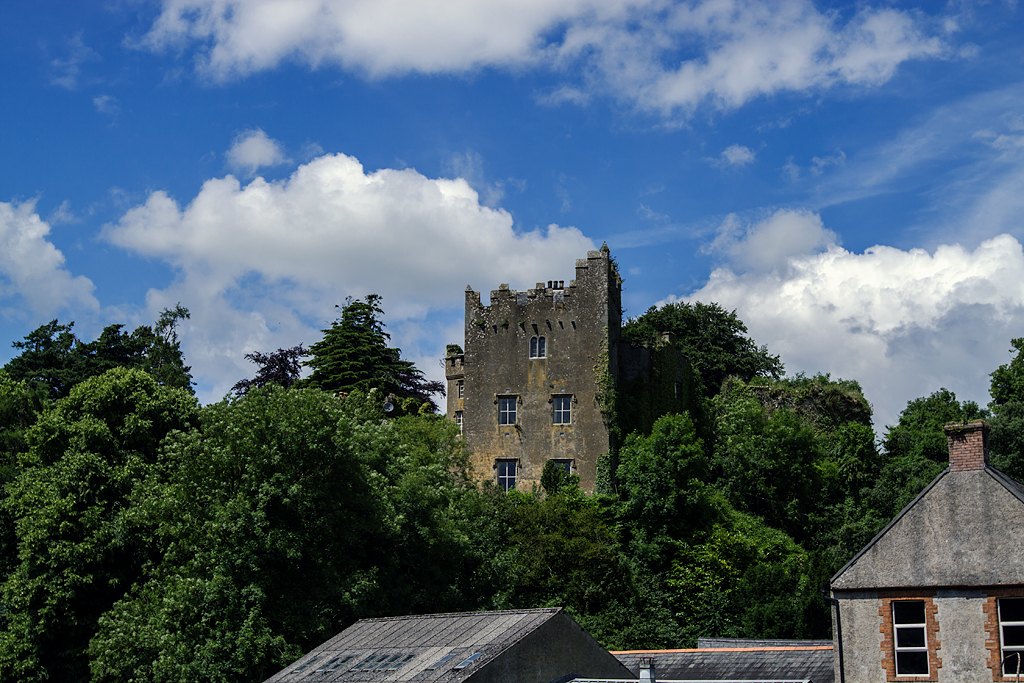
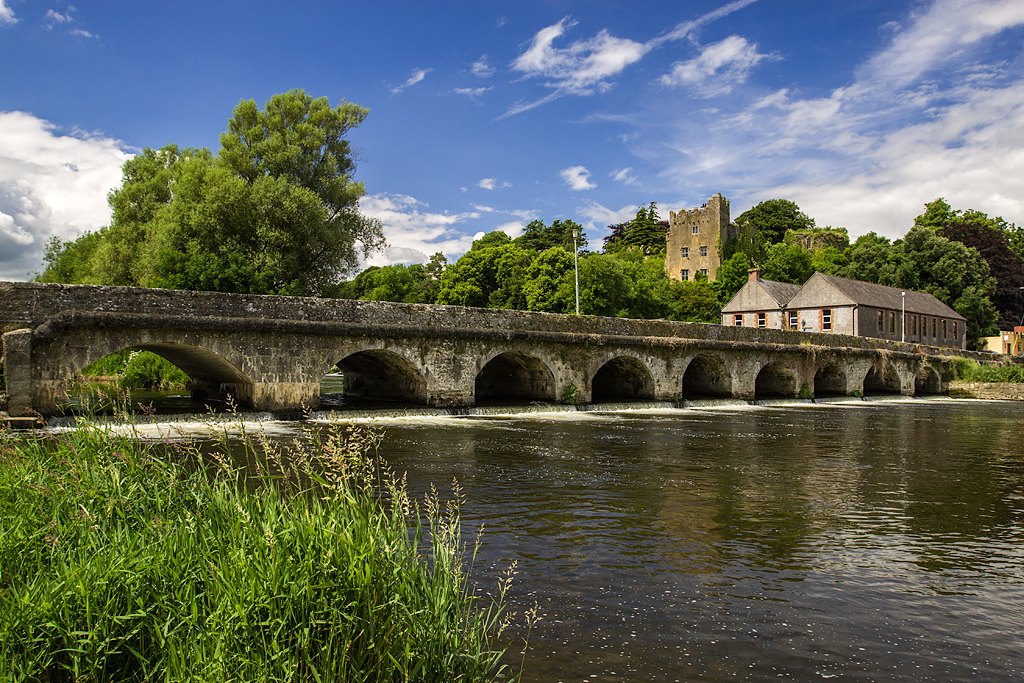
Ask almost anyone in the Suir valley what happened to Ardfinnan Castle and you will hear one word: Cromwell. There is truth in it, but also some blur. Local memory has folded a long, grinding war into one name. This article sets out what the sources actually support, and where they leave gaps.
The wider war
The war that reached the Suir began with the Irish Rebellion of 1641, which put much of Ireland under the Catholic Confederation. For most of the 1640s, control of towns and castles in Munster passed back and forth between Confederate, Royalist and Parliamentarian forces.
Our nearest documented example is Cahir, four miles north of Ardfinnan. In 1647, after Lord Inchiquin’s victory at Knocknanauss, Cahir Castle was handed to him by the guardian of the young Lord Cahir. We have found no source that says what Ardfinnan’s garrison did that year, and we will not guess.
Confederate Ireland collapsed in 1649. Ormond’s combined Royalist and Confederate army was beaten at Rathmines on 2 August 1649, and Oliver Cromwell landed near Dublin on 15 August, with Henry Ireton arriving two days later.
Spring 1650 in Tipperary
After a winter in quarters, the New Model Army turned on the walled towns and castles of the south-east in early 1650. Wikipedia’s account of the Siege of Clonmel records how fast the region fell. A letter of 28 February reports Cahir as having “yielded without shot or blowe”, and Kilteenan surrendered the morning after being besieged. Cahir Castle’s own article likewise says it surrendered to Cromwell in 1650 without a shot fired.
Clonmel, a few miles east of Ardfinnan, was different. The siege ran from 27 April to 18 May 1650, and the Parliamentarian assaults were repulsed at a cost of up to 2,000 men before the town surrendered the following day. Cromwell then left for England and handed command to Ireton.
What happened at Ardfinnan
The article on Ardfinnan Castle gives this sequence:
- From 1649, Captain David Fitzgibbon, known as the “White Knight”, held the castle.
- On 2 February 1650, Henry Ireton besieged it. Cannon breached the walls and the garrison surrendered.
- The New Model Army garrisoned the castle, and troops afterwards slighted it, meaning they partly demolished it so it could not be used again.
The sources do not agree. The Irish Penny Journal (1841) says the castle remained a fortress until 1649, “when it was dismantled by Cromwell”, who is said to have “planted his cannon on the opposite hill near the bridge” and made a breach in the walls. A more recent summary gives 1650 and names Ireton. Details also vary within the modern account itself: one version says only about thirteen of the outer guard were killed, another that Fitzgibbon held out overnight.
We therefore cannot responsibly give you a single date, or say whether Cromwell was personally present. What the sources do agree on is the outline: a cannon bombardment from the high ground across the river, a breach, a surrender and a castle left damaged.
Fitzgibbon and the Butlers
The fate of the garrison’s captain is better documented than the siege. Fitzgibbon had married Joanna Butler, widow of Richard Butler of Ardfinnan Castle. He was spared after the surrender but lost his lands. After the Act of Settlement banished Catholic landowners west of the Shannon, he was transplanted in 1653, and he is recorded living in County Clare in 1666.
The land itself changed hands on paper. A survey of 1654 recorded the Manor of Ardfinnan, with castle, mill and weir, as held by the Bishop of Lismore and Waterford, with five acres leased to Richard Butler.
The long aftermath
The wider settlement was severe. Under the 1652 Act for the Settlement of Ireland, much of their land was transferred to Protestant settlers. Catholic ownership of land fell from about 60% in 1641 to about 20% by the Restoration in 1660. Ardfinnan’s story of lost lands and a lost garrison captain belongs to that picture.
The castle itself survived as a ruin and was brought back into use. In the 1790s British fencible regiments camped around it, and by about 1846 the tower-house had been restored as a country house. Today it is a private residence, and, as ever, the best view is from the old bridge. For the castle’s origins, see Who Built Ardfinnan Castle?, and for more, browse the history section.
What we have left out
We have deliberately not repeated claims that we could not trace to a reliable source: any account of casualties, any dialogue attributed to Cromwell, or any story of what happened to the village’s people during the siege. If you know of a documented source for these, we would like to read it.