The People of Ardfinnan: Figures Who Shaped the Parish
A village of fewer than a thousand people has still left a long paper trail, and the names in it tell the story of the Suir valley.
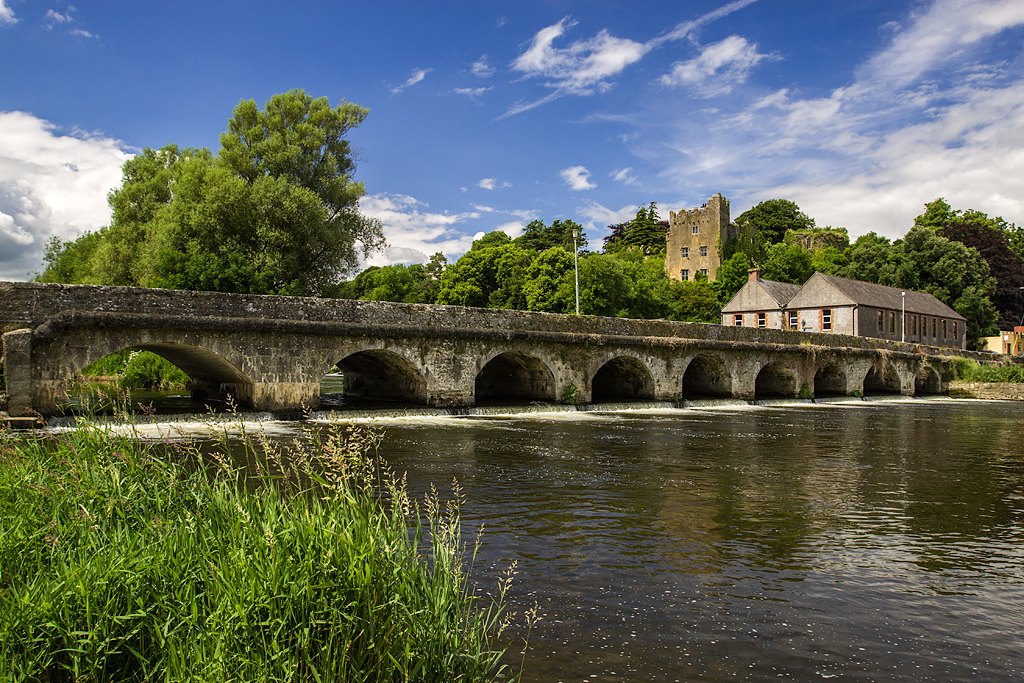
Ardfinnan had 978 residents at the 2022 census, according to the Wikipedia entry for the village, which cites the Central Statistics Office. Small as that is, the place has attracted saints, kings, soldiers, millers and relief workers across fifteen centuries. This article does not try to list everyone. It profiles only people who appear in published sources, and says plainly where a source is a tradition rather than a record. For the village itself, see the history of Ardfinnan village.
The saints: Fíonán and Mochuda
The village takes its name from Fíonán Lobhar, Finnian the Leper. Tradition holds that he founded an abbey here with a leper colony in the sixth century. The Wikipedia entry notes that this rests on tradition, and that a tenth-century litany of Irish saints refers to the monastery of Finnian on the hill of Brennuin. We cannot know the man behind the name, but the placename is firm evidence that someone of his reputation was remembered here. The full story of the name is in What Does Ardfinnan Mean?.
A second saint is tied to the place in the same article. Carthage, also called Mochuda, is said to have arrived at what was then Ard Breanuinn around 631 AD, exiled with about 800 monks and laity, before going on to found Lismore. The Wikipedia text draws this from published translations of the saint’s life. Treat the numbers as the hagiographer’s, not a census.
A king’s bequest
The same article records that in 908 Cormac mac Cuilennáin, King of Munster, left gold, silver, horses, armour and a sword to Ardfinnan Abbey. It cites W. McCraith’s 1912 book The Suir, From Its Source to the Sea. It is a useful reminder that an early Irish monastery was also a place of wealth, learning and diplomacy, and that the Suir was a highway.
Princes, governors and defenders
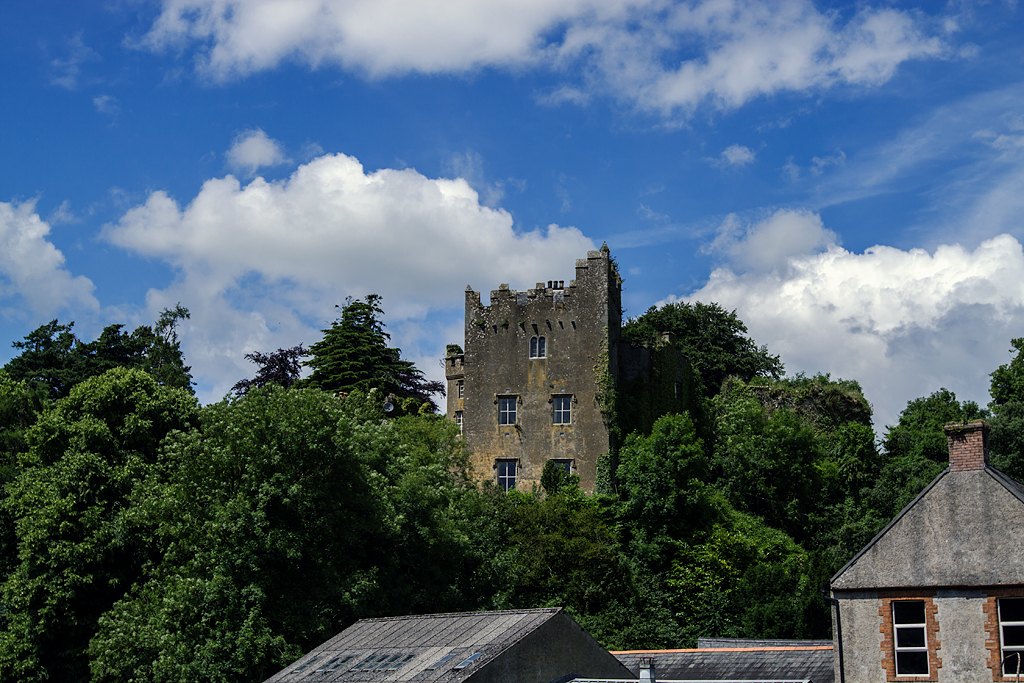
The castle gives us the best-documented names. According to the Ardfinnan Castle article:
- Prince John, first Lord of Ireland, built the castle in 1185 during his first expedition to the country, and Maurice de Prendergast was its first governor.
- Captain David Fitzgibbon, of the family known as the White Knight, defended the castle from 1649. On 2 February 1650 Henry Ireton, who was with Cromwell’s army, besieged it with cannon. Fitzgibbon surrendered, was spared, lost his lands and was transplanted west in 1653.
- The Prendergast family, descendants of Maurice, had the tower house restored around 1846 and turned into a country house. Admiral Sir Robert Prendergast was the last of the family to hold it and settled in England after retiring in 1920.
- John Mulcahy, owner of the Ardfinnan Woollen Mills, bought the castle in 1921. Restoration was complete by 1929.
The Fitzgibbon story is the most human of these. A defender loses everything and is sent to Clare, yet his grandson Philip comes back to Castlegrace, a few miles away. Families in this valley were hard to dislodge for long.
The mills and the Famine years
Ardfinnan’s industrial history has names too. The village article records that James Fennell, a Quaker, leased the watermill as a gristmill in the mid-nineteenth century from James Prendergast, and that the Woollen Mills were visited by Edward VII in 1904.
In the Famine, the Society of Friends is recorded again. In his study of the period, historian Denis Marnane notes that the Friends set up porridge kitchens in the Clogheen Union area and that similar facilities were about to open at Ardfinnan. He also lists Ardfinnan among the places where a relief committee had formed by April 1846, and records that the county’s population fell by 24 per cent between 1841 and 1851. After the Famine, the same Wikipedia article says that the Countess of Donoughmore set up the Ardfinnan Clothing Club, citing the Clonmel Chronicle of 1871.
Sport
Gaelic games run deep in the parish, and its most celebrated son is Michael “Babs” Keating, born in Ardfinnan in 1944. One of the great dual players of his era, he won All-Ireland senior hurling medals with Tipperary in the 1960s, lined out in an All-Ireland football final for the county, and later managed the Tipperary hurlers to All-Ireland success. The Ardfinnan club’s documented players also include Michael Phelan, born in the village in 1982, who played right wing-back and made his senior debut for Tipperary in the 2006 football championship. His Wikipedia biography records that he captained Tipperary that year, won the Tipperary Senior Football Championship with Ardfinnan in 2005, and retired from inter-county football after 2009. He is a living public sportsman, and we list only what the public record states.
What is missing
The record has gaps. Parish priests, teachers, shopkeepers, mill hands and farmers shaped the village far more than any baronet or footballer, yet they rarely leave a trace in the published record. The Irish Folklore Commission’s Schools’ Collection of the 1930s, searchable at duchas.ie, is the richest place to find them, as local children recorded what their neighbours remembered. If you know of a well-documented Ardfinnan figure we have missed, the Journal would like to hear a sourced account.
The people here are best understood as a chain: a saint who gave the name, monks who kept it, soldiers who fought over the hill, and millers and neighbours who kept the village alive after they left. For what happened to those who left altogether, read Ardfinnan and the Wider World.