Saint Finnán and Early Christian Ardfinnan
Before the castle there was a monastery, and before the monastery a saint whose name the village still carries.
The village of Ardfinnan takes its name from a saint, but the documentary record of that saint is faint, and it is worth being honest about this. What follows separates what is written down from what is tradition.
The name
In Irish the village is Ard Fhíonáin. The first element, ard, means a height or high place. The second is the genitive of the personal name Fíonán, so the name means “Fíonán’s height”. Wikipedia also records an earlier name for the place, Ard Brennuin, which later gave way to the saint’s name. For the language in more detail, see The Meaning of the Name Ardfinnan.
Which Fíonán?
The saint traditionally linked to Ardfinnan is Fíonán Lobhar, “Fíonán the Leper”. Wikipedia gives his feast day as 16 March and lists his death as around 560. The nickname lobhar probably refers to a skin disease. It would be risky to read it as medically precise.
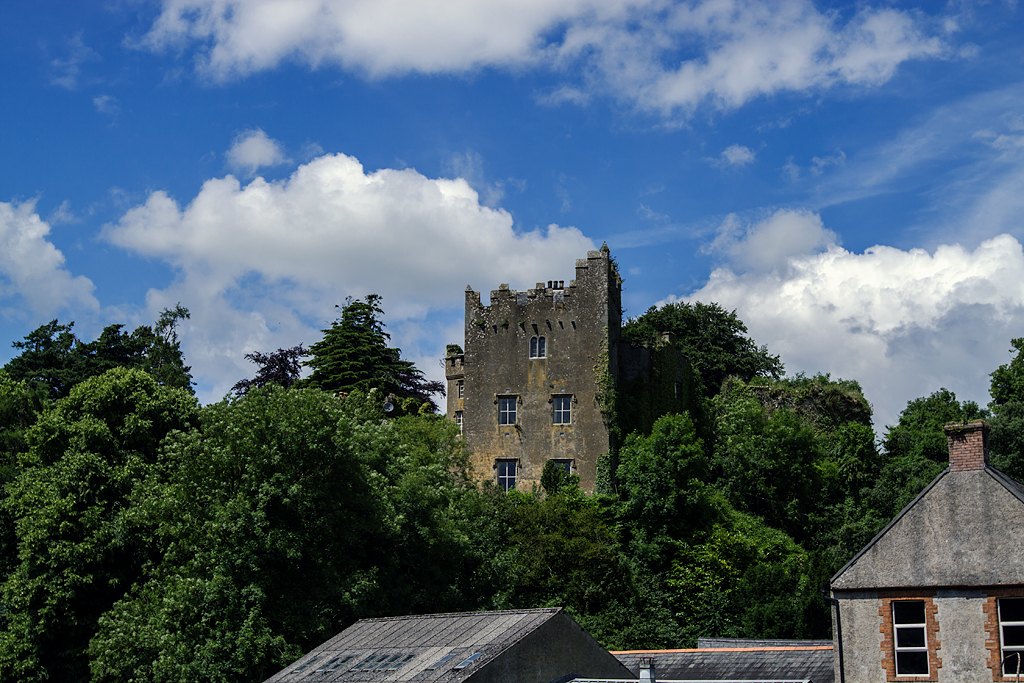
Tradition says he established an abbey at Ardfinnan. It also says, according to Wikipedia, that the abbey stood high up behind the present castle site, and that the Church of Ireland church and graveyard of Saint Finnian in the village sit on what is believed to be his monastic settlement.
All of this should be read as tradition. Wikipedia’s article on Finian Lobhar notes a footnote by the historian John Healy doubting that this Fíonán founded the monastery at Innisfallen in Killarney, and suggesting that Finan Cam was the founder instead. Irish saints named Fíonán or Finnian were many, and later writers often confused them. We have found no contemporary source that fixes the Ardfinnan saint’s dates or life. An 1868 gazetteer, quoted by GENUKI, says he flourished in the later sixth century and founded an abbey of Regular Canons, but that is a nineteenth-century statement and a later monastic form, not early evidence.
Mochuda and the pilgrim road
The better-documented saint is Mochuda (also Mo Chutu, Carthach or Carthage), the founder of Lismore. He died on 14 May 637 according to the Annals of Inisfallen, and the Annals of Ulster record his expulsion from Rahan in County Offaly at Easter 637.
Wikipedia states that he and his monks then took refuge at Ardfinnan, in the territory of the Déisi, where he made a peaceful land agreement with the local king, and cells were established there before he moved on to found Lismore. The Wikipedia article on Ardfinnan tells a fuller version, in which Carthage arrives around 631 with about 800 monks. The two accounts differ on dates, and the figure of 800 is not one we can support independently, so the safest statement is simply that Mochuda’s community is linked to Ardfinnan in the seventh century.
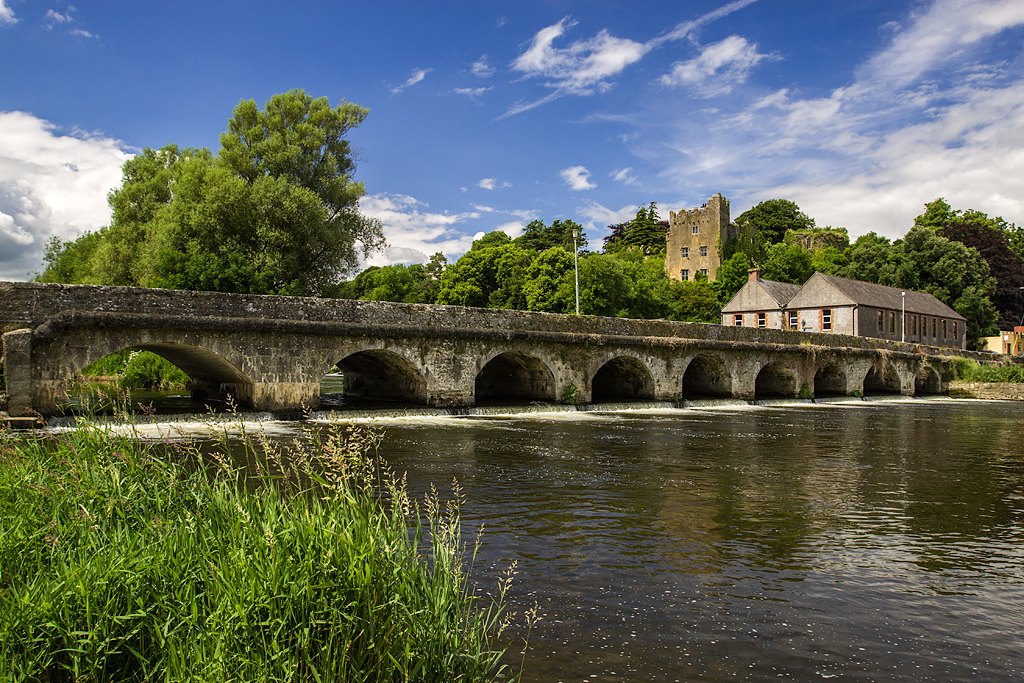
What matters is the road. Ardfinnan lay on the pilgrim route between Cashel and Ardmore, with a ford across the Suir at the place where the bridge now stands. The same article says that Saint Declán passed this way. A settlement at such a crossing would have drawn travellers, and that helps explain why a monastery was founded here at all.
What the records show
From the tenth century, the written evidence becomes firmer, at least in outline:
- 908: Cormac mac Cuilennáin, King of Munster, bequeathed gold, silver, horses, armour and a sword to Ardfinnan Abbey.
- 1085: the death of Giola, Prior of Ardfinnan, is recorded.
- Late 1170s: the abbey was plundered and burned. Wikipedia gives 1178; the Irish Penny Journal says 1179. The sources differ by a year, so we say only “the late 1170s”.
In 1185, Prince John built his castle on the site of the former abbey, as the article on the castle’s builder describes. The Irish Penny Journal summed it up in 1841: the saint “founded a church and monastery here in the seventh century”, which the English burned, and the castle was built on its site. That dating of the saint to the seventh century conflicts with the sixth-century tradition for Fíonán Lobhar, which is a good illustration of how muddled the early layers are.
What can be said
Putting it together, a cautious account runs like this. An early church community stood at a height beside the Suir ford, at a point on the pilgrim road from Cashel to Ardmore. It was associated in tradition with a saint named Fíonán, and in the seventh century with Mochuda’s monks. It was important enough for a king of Munster to remember it in a will in 908, and it lasted until the Normans arrived and built over it.
The saint himself remains half in shadow. The place, though, has kept his name for well over a thousand years, and that is its own kind of record. For the rest of the village’s story, see A Short History of Ardfinnan.