Ardfinnan in the Twentieth Century: Revolution, Electric Light and a Changing Village
A royal visit, a revolution fought in the surrounding countryside, electric light from a mill and a video-game factory: the twentieth century was not quiet in Ardfinnan.
Ardfinnan in the twentieth century is a story of two kinds of change. One was political and violent, and it happened mostly around the village rather than in it. The other was industrial and practical: a mill that lit houses, a state electricity scheme, and factories that arrived and left. This article keeps to what the sources support, and says plainly where they are silent.
The opening years
The century began with a royal visit. In 1904, Wikipedia’s article on the Woollen Mills records, Edward VII, Queen Alexandra and Princess Victoria visited the mills during a private motor tour of Ireland. The mills were then at the centre of village life; the full story is in The Ardfinnan Woollen Mills. Ardfinnan GAA was formed in 1910, and the same article credits the mills with a strong influence on it. See the history of Ardfinnan GAA.
The War of Independence: the county context
South Tipperary sits near the start of the story. The Wikipedia article on the Irish War of Independence dates the war from 21 January 1919, the day of the Soloheadbeg ambush in County Tipperary, in which two RIC constables were shot. Two days later the British government declared South Tipperary a Special Military Area. On 10 December 1920 martial law was proclaimed in Cork, Kerry, Limerick and Tipperary. A truce took effect on 11 July 1921.
Where does Ardfinnan fit? We have to be honest: we could not find an account of events in the village itself that we were able to read and verify. Generalisations about the Suir valley would be guesswork. The Bureau of Military History witness statements, which are indexed by unit, are the place to look for the local Volunteer companies and any attempted attack on the village barracks. We have not been able to open them, so we make no claim from them.
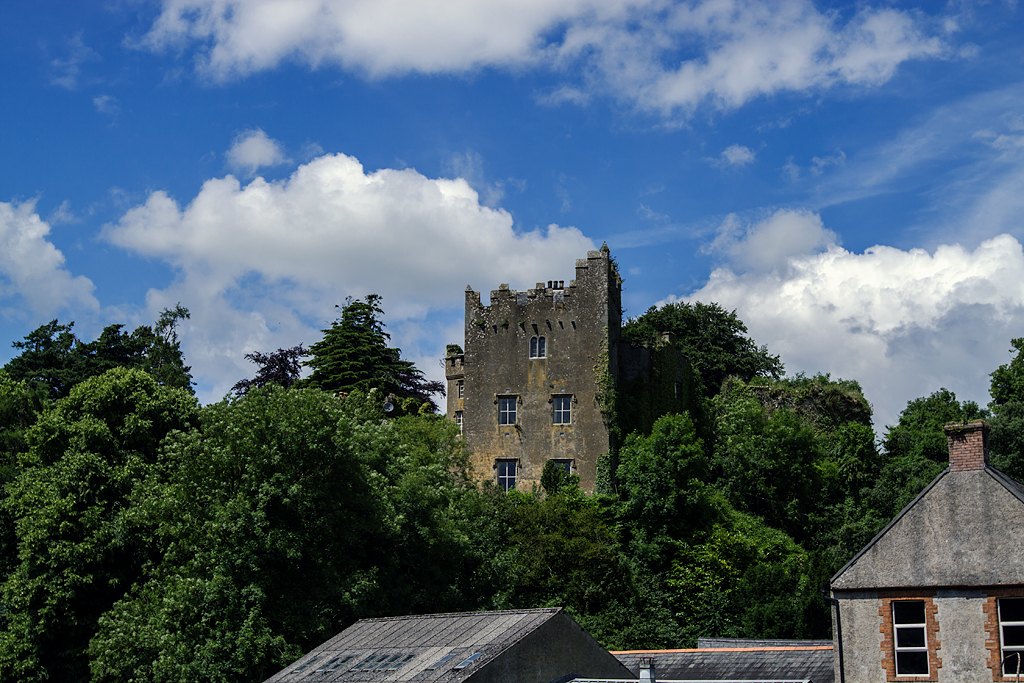
Two local dates do appear in Wikipedia’s mills article. Frank Mulcahy of the mill-owning family died in 1920. John Mulcahy bought Ardfinnan Castle in 1921 and is said to have died around 1922. Wikipedia’s castle article adds that the last Prendergast occupant, Admiral Sir Robert Prendergast, settled in England after retiring in 1920. These are family and property facts, not accounts of the fighting.
The Civil War
The Civil War ran from 28 June 1922 to 24 May 1923, when the IRA ceasefire order was issued, according to Wikipedia. In Munster the decisive stage was the Free State offensive of the summer. Wikipedia’s article on it records that National Army forces under Major General John T. Prout took Tipperary town on 2 August, Carrick-on-Suir on 3 August and Clonmel on 10 August 1922, and that Liam Lynch had moved his headquarters to Clonmel in July. Ardfinnan lies about 14 km from Clonmel, so the war was close by, but that article does not name Ardfinnan or Cahir and we will not invent an episode for them. It does note that Republicans often retreated, and burned the barracks they held, rather than risk heavy casualties.
Mill, light and power
Meanwhile the mill was doing something unusual for a village of this size. According to Wikipedia’s village article, the firm supplied electricity and gas for streetlights and homes in the surrounding area “long before rural electrification”. The mills article puts hydro-electric generation and carbide lamps from the 1900s, and says the ESB took over the supply in January 1953.
The national picture explains why that mattered. The ESB was founded in 1927, following the Shannon Scheme at Ardnacrusha. Rural electrification began in 1946, and between 1946 and 1979 the ESB connected more than 420,000 rural customers, per Wikipedia, in what is known as the “Quiet Revolution”. A village with its own mill supply was ahead of much of the country, though the sources do not say how many Ardfinnan homes were connected or when.
From wool to arcade cabinets
The mill’s decline came in the 1970s. Wikipedia reports that the workforce was let go in January 1973, with competitive disadvantages, including Ireland’s entry to the EEC, blamed.
New work followed quickly. The village article says Atari manufactured wooden video-game arcade cabinets near the village from 1974 to 1984, with 200 workers building up to 2,000 cabinets a month at the peak. An insulation manufacturer, Moy Isover, operated in the village from 1974 until its closure in 2008. Few Tipperary villages can claim both a king’s motoring cloth and an arcade-machine line.
The village now
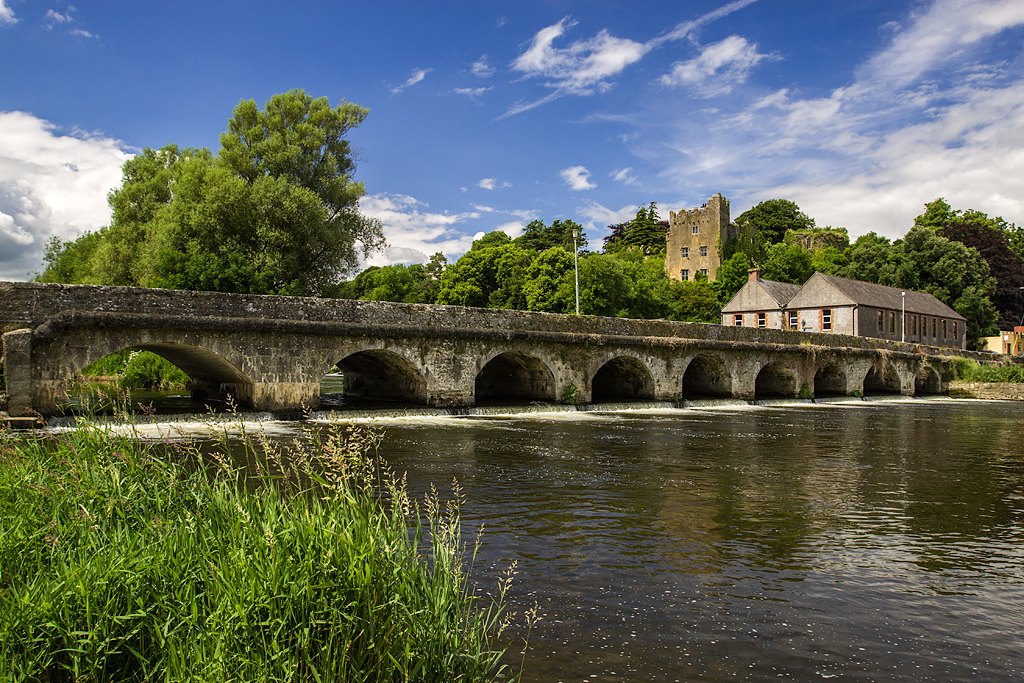
Ardfinnan had 978 residents at the 2022 census. The castle, bridge and adjoining watermill are protected structures. The bridge itself needed attention: after structural damage was found, a one-way traffic-light system was introduced at the end of 2015, and in January 2017 €800,000 was allocated for remedial works, as covered in Ardfinnan Bridge.
The twentieth century left Ardfinnan smaller in industry than at its peak and richer in memory. To see what it grew from, read the history of Ardfinnan, look at Ardfinnan Castle, and for what became of those who left, read Ardfinnan and the wider world.
Frequently asked questions
What happened in south Tipperary during the War of Independence?
The conflict is usually dated from the Soloheadbeg ambush in County Tipperary on 21 January 1919. South Tipperary was declared a Special Military Area two days later, and martial law was proclaimed in Tipperary on 10 December 1920. A truce began on 11 July 1921.
When did electricity reach Ardfinnan?
Wikipedia says the Ardfinnan Woollen Mills supplied electricity and gas for streetlights and homes in the area long before rural electrification, and that the ESB took over the supply in January 1953. The national rural electrification scheme began in 1946.
What was made in Ardfinnan in the 1970s?
Wikipedia records that Atari manufactured wooden arcade cabinets near the village from 1974 to 1984, with up to 200 workers at its height, and that an insulation plant operated in Ardfinnan from 1974 until 2008.
What is the population of Ardfinnan?
978 at the 2022 census, according to Wikipedia, citing the Central Statistics Office.